A water bill that doubles with no change in your habits is a warning. Most often the cause is a leak, and the common culprits are a toilet flapper that does not seal, a dripping faucet, a broken irrigation line or a pipe leaking underground or inside a wall.
Raleigh Water bills Wake Forest water and sewer accounts, and it publishes a leak adjustment policy. This post explains the policy in plain terms and how to find the leak.
Check for a leak first
These steps tell you whether water is moving when nothing should be using it.
Turn everything off
Make sure no tap, appliance or irrigation system is running.
Read the meter
Note the reading or watch the leak indicator on the meter dial.
Wait and read again
If the number moves with everything off, water is leaking somewhere.
Check toilets
Add a few drops of food coloring to the tank. If color reaches the bowl without flushing, the flapper leaks.
Call a plumber
If you cannot find the source, a plumber can locate it.
What Raleigh Water's policy says
Raleigh Water's leak adjustment page says the leak must be on the customer's side of the meter, or the increase must come from filling a pool. Water use must be at least two times your monthly average. Only one leak adjustment is allowed per 12 months, and a pool adjustment counts toward that limit.
The page says base, watershed and infrastructure replacement fees are never adjusted for a leak.
How Raleigh Water adjusts for leaks
| Type of leak | What is adjusted | Examples |
|---|---|---|
| Accessible leak, visible or audible | Water charges, to double the monthly average | A hose, toilet or faucet |
| Non-accessible leak | Water and wastewater charges, to double the monthly average | Underground, inside walls or in a water heater |
| Not eligible | No adjustment | Watering sod, gardening or washing vehicles |
This summarizes the city's published policy. Confirm the details with Raleigh Water before relying on it.
Hidden leak driving your bill up? Call and book a leak detection visit.
Call (919) 944-7281Wake Forest local note: who bills you and how to ask
The Town of Wake Forest says Raleigh Water bills all water and sewer accounts for Wake Forest customers. Raleigh Water's Customer Care and Billing line is 919-996-3245. The leak adjustment page also lists leaks caused by a liable third party, or covered by insurance, and meter tampering as not eligible.
In practice, that means two steps. Fix the leak, keep the receipt and photographs, then contact Raleigh Water about an adjustment. The policy requires proof of repair, so a plumber's invoice that names the leak and the repair is the document to keep. Source type: Raleigh Water leak adjustment page and Town of Wake Forest.
Why proof of repair matters
An adjustment only makes sense once the leak has stopped. A plumber's invoice that describes where the leak was, what was repaired and the date gives Raleigh Water what it needs. Keep before and after photographs of the repair if you can.
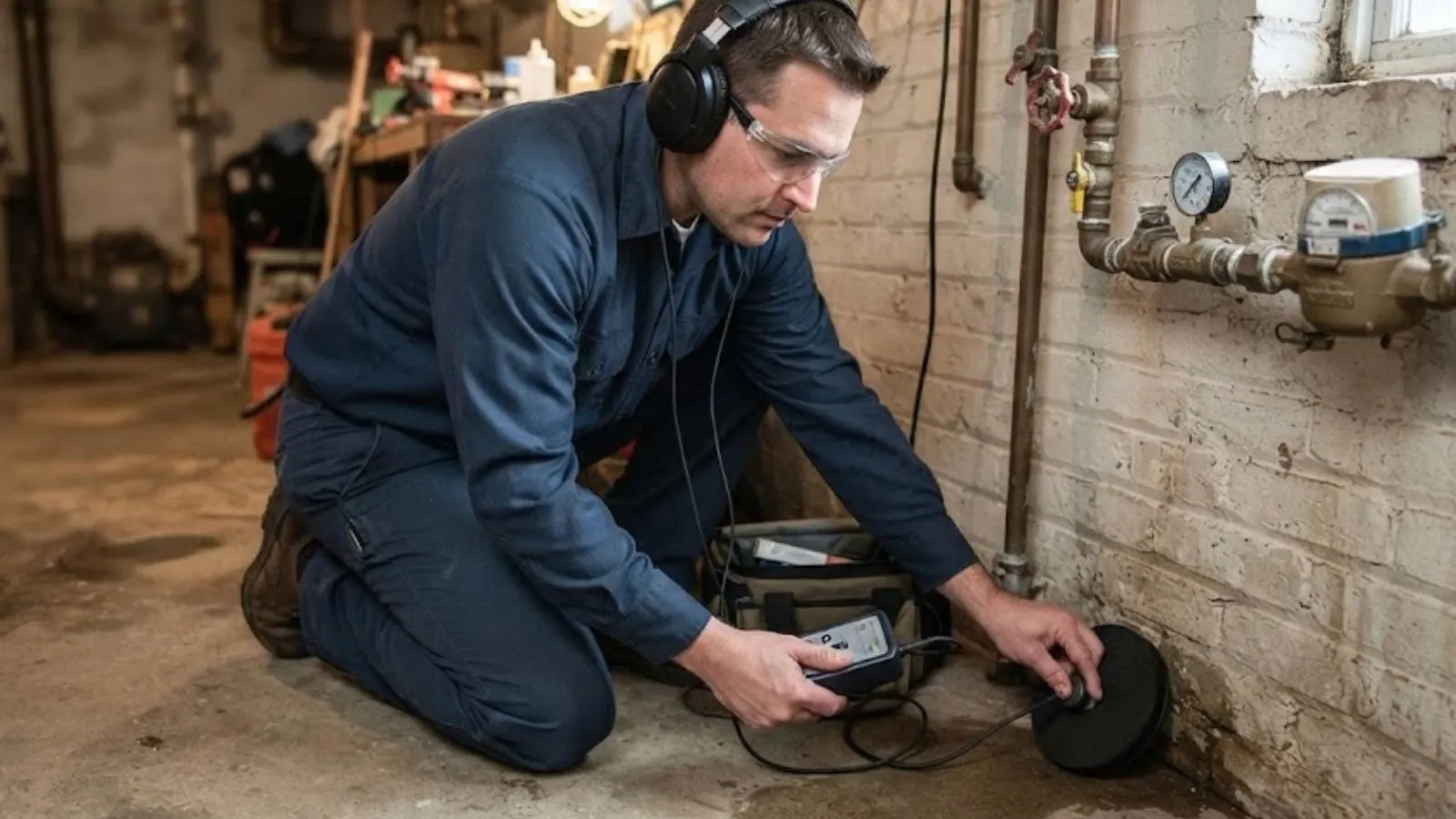
A leak found by a leak detection visit is a good example. The plumber locates the pipe, repairs it and writes it up. That paperwork supports the adjustment request.
The usual hidden causes
These cause most unexplained jumps in a bill.
Toilet flappers
A worn flapper can run for days without a sound.
Irrigation lines
A broken sprinkler head or a stuck valve keeps water flowing outdoors.
Slab or buried lines
Leaks under a slab or in a yard line show up only on the meter.
Water heater leaks
A failing tank can leak slowly into a pan or floor drain.
Outdoor faucets
A hose bib that drips or a hose left running adds up.
Pipes in the wall
A pinhole in a supply line may leak behind drywall for weeks.
How to read your meter
Most residential meters have a small dial or triangle that spins when water moves. With every fixture off, a moving dial means a leak. Write down the reading, wait an hour without using water and read it again. A change tells you the leak is steady and gives you something to tell the plumber.
A meter that shows no movement over an hour points away from a leak and toward use, such as a guest, a new appliance or irrigation set to run longer than you thought.
Irrigation and seasonal bills
Outdoor use can raise a bill a lot in warm months. Check the controller for settings that changed, and look for sprinkler heads that are cracked or stuck. The policy page does not adjust for watering sod, gardening or washing vehicles, so ordinary heavy use is not a leak.
Talking to Raleigh Water
When you call, have the account number, the dates of the high bills and the repair invoice ready. Say where the leak was and whether it was visible, because the policy treats accessible and non-accessible leaks differently. Write down the name of the person you speak with and the date.
If the answer is not what you expected, ask which part of the policy applied. A clear reason helps you decide whether to supply more documents.
Repair first, then ask
The order matters. Find the leak, repair it and then ask for the adjustment. Raleigh Water's policy ties the adjustment to a documented repair. Our water service line page covers underground lines, and a toilet repair fixes the most common source.
We serve Wake Forest and Rolesville through our Rolesville page, and the full area is on the service area page.
Questions about high water bills in Wake Forest
How often can I get a leak adjustment from Raleigh Water?
The city's policy allows one leak adjustment per 12 months, and a pool adjustment counts toward that limit. The leak must be on your side of the meter and use must be at least twice your monthly average.
Does an adjustment cover the base fees on my bill?
No. Raleigh Water's page says base, watershed and infrastructure replacement fees are never adjusted for a leak.