
A bathtub faucet leak can start small. A steady drip from the spout, a trickle from the showerhead after the tub fills or a damp spot on the wall beside the tub all point to a part that has worn out. Left alone, the leak wastes water and can soak the wall behind the tub.
This guide explains what is inside a tub faucet, how to match a symptom to a cause and when the job belongs with a plumber.
What is inside the wall
Most tubs use a single valve behind the wall that mixes hot and cold water, with a handle and trim on the outside. A cartridge or a pair of stems inside the valve controls the flow. A diverter, either a lift knob on the spout or a separate handle, sends water to the shower. Each of these parts wears out differently.
A drip from the spout when the faucet is off usually means a worn cartridge or seat. A trickle from the showerhead when the tub runs means a worn diverter. A leak at the handle means worn O-rings. A leak behind the wall means a failed connection or a split pipe, and that is a different problem.
Bathtub faucet leaks and likely causes
| Where it leaks | Likely cause | Repair |
|---|---|---|
| Spout drips when the handle is off | Worn cartridge or valve seat | Replace the cartridge or seat |
| Water leaks at the handle | Worn O-rings or stem seals | Replace the cartridge or O-rings |
| Showerhead drips while the tub fills | Worn or dirty diverter | Replace the diverter or spout |
| Water at the spout wall joint | Failed seal between the spout and the wall | Reseal or replace the spout |
| Damp wall or ceiling below | Leak inside the wall | Plumber, open the wall to inspect |
Steps for a spout or handle drip
These steps cover a single-handle tub valve with a pull-out cartridge.
Turn off the water
Close the main valve or the tub's shutoff if it has one. Open the faucet to relieve pressure.
Remove the handle and trim
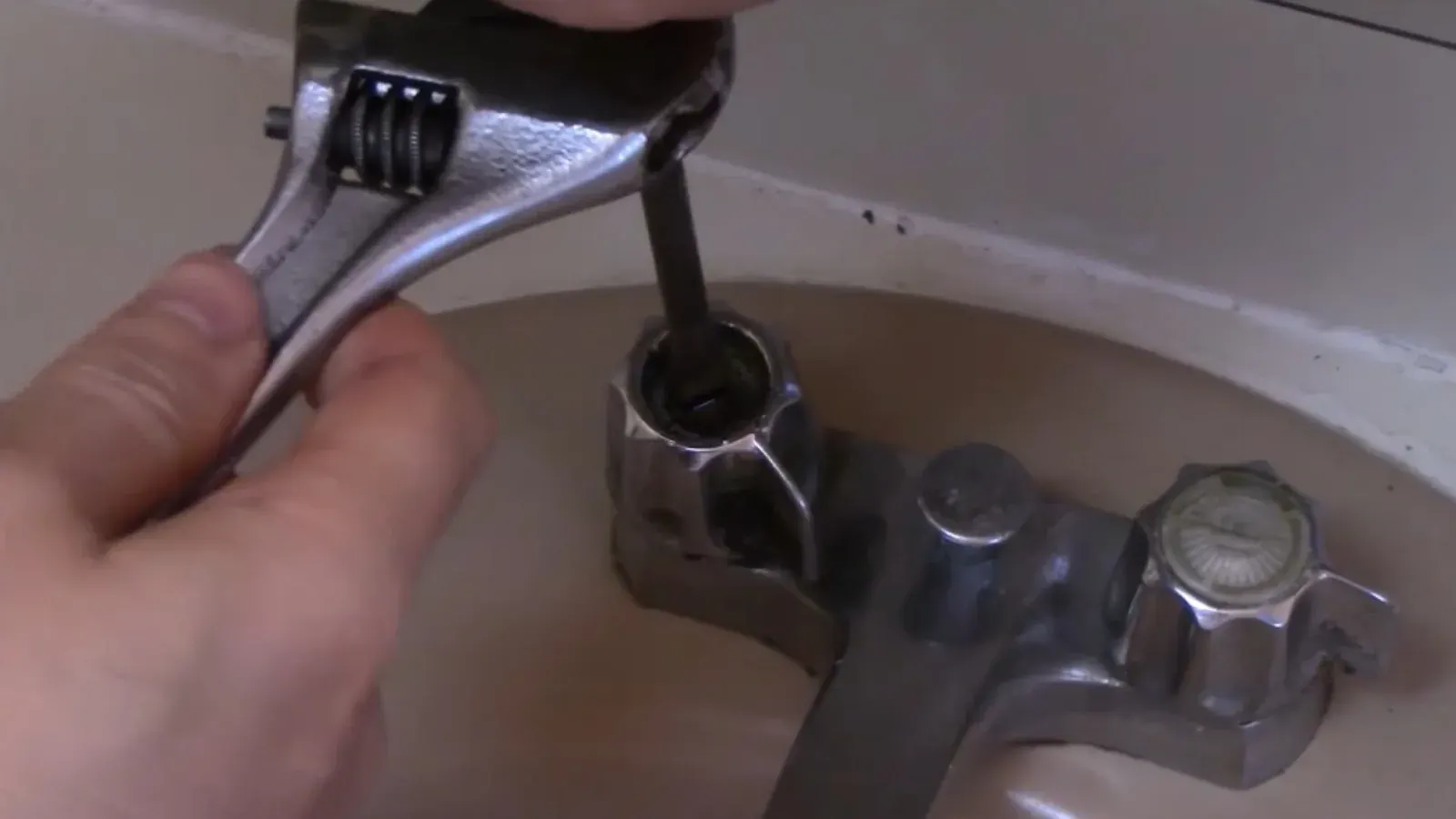
Pry off the cap, remove the screw and lift off the handle and trim plate.
Pull the cartridge
Remove the retaining clip or nut and pull the cartridge straight out. Note its orientation.
Match and replace
Take the old cartridge to a supplier and match it by brand and model. Install the new one in the same position.
Reassemble and test
Replace the trim, open the water and run the tub. Check for drips at the spout and showerhead.
Tub faucet leaking and you cannot find the cause? Call and book a plumber.
Call (919) 944-7281Wake Forest local note: older houses and their tub fixtures
Wake Forest has older housing near its historic core. The Town's historic district pages describe the Glen Royall Mill Village, built between 1900 and 1949, as one of the most intact mill villages in Wake County, and the Downtown Wake Forest Historic District covers buildings from about 1890 to 1949. Houses of that age have usually had bathroom fixtures replaced at least once.
That matters for a tub repair, because a valve from an earlier decade may use stems and washers rather than a modern cartridge, and parts can be harder to find. A plumber can often tell the age of a valve by sight and decide whether to repair or replace it. Source type: Town of Wake Forest historic district page.
When the leak is inside the wall
A stain on the ceiling below the tub, a soft spot in the bathroom floor or a wall that feels damp after a bath are signs the leak is not at the trim. Water travels along pipes and framing, so the wet spot may be far from the source. Do not wait on this. Water inside a wall promotes rot and mold.
A plumber uses a moisture meter and, when needed, an access hole to find the source. That visit can connect to a leak detection check if the cause is not obvious. A leak at the valve body or at a supply connection usually means the valve has to come out and be replaced.
Signs the wall is already wet
Look for paint that bubbles, grout that stays dark, a musty smell or a floor that feels soft near the tub. Tile that sounds hollow or feels loose can mean water has softened the backing. These signs build slowly, so a small drip you ignored for months may already have done damage.
Shut the water to the tub at the valve if it has one, and call a plumber before the wall is opened. The plumber finds the source first, so repairs are not guessed.
Access panels and why they matter
Some bathrooms have an access panel on the back of the tub wall, often in a closet or hall. It lets a plumber reach the valve without cutting tile. If your house has one, keep it clear. If it does not, a plumber can add one during a repair so the next one is easier.
Repair or replace the valve
A cartridge swap is a short job when the valve is sound. Replace the valve itself when the body is corroded, parts are no longer made or the valve has leaked repeatedly. A new valve costs more and often means opening the wall, so the decision is worth discussing with a plumber. Our faucet repair page covers the common options.
Getting it fixed
Call the dispatch line and describe where the water appears. We cover Wake Forest and Rolesville through our Rolesville page, and the full area is on the service area page. A leaking tub faucet is a daytime booking, but a valve running behind a wall is worth a call at any hour.
Questions about tub faucet leaks in Wake Forest
Are Wake Forest's older houses likelier to need a new tub valve?
Older houses are more likely to have had several fixture changes, and a valve from an earlier decade may use parts that are hard to find. A plumber can see the age of the valve and advise repair or replacement.
Can I fix a tub faucet leak without opening the wall?
Often yes. Most drips come from the cartridge, which is reached from the front by removing the trim. A leak behind the wall needs access to the valve body.