
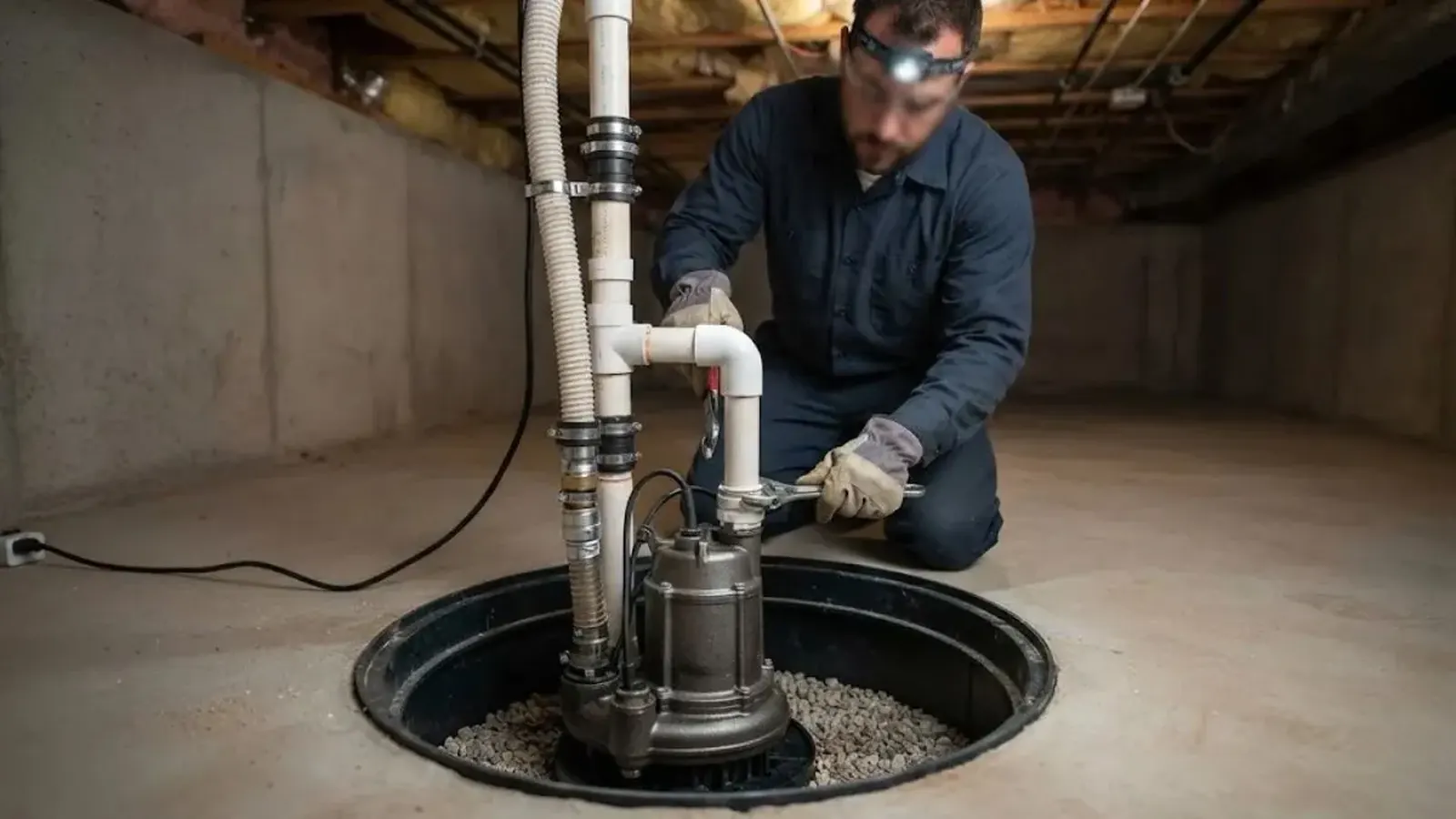
A sump pump sits in a pit in the lowest part of a basement or crawl space. When water rises in the pit, a float switch starts the pump and it pushes the water out through a pipe to a discharge point away from the house. It is a small machine with a big job.
This guide explains how a pump works, what to check before installing one and where Wake Forest homeowners can look up local flood risk.
How a sump pump system works
The system has a pit, a pump, a float or sensor and a discharge line. A check valve in the line keeps water from flowing back into the pit. Some homes add a battery backup that keeps the pump running during a power outage, which often happens in the same storms that raise water.
Parts of a sump pump system
| Part | What it does | What to check |
|---|---|---|
| Pit | Collects water below the floor | Keep it clear of debris |
| Pump | Moves water out of the pit | Test by pouring water into the pit |
| Float switch | Starts the pump as water rises | Make sure it moves freely |
| Discharge line | Carries water away from the house | Confirm it drains away from the foundation |
| Check valve | Stops water from flowing back | Listen for backflow after the pump stops |
| Battery backup | Runs the pump without power | Test the battery on a schedule |
Check your flood risk before you decide
The best first step is a look at your address on official flood maps. The state's Flood Risk Information System, known as FRIS, lets you enter an address and see the flood zone, its risk level and the base flood elevation. A pump helps with groundwater and surface water in a basement or crawl space, but it does not stop a creek from rising.
Wet crawl space or basement? Call and book a sump pump visit.
Call (919) 944-7281Wake Forest local note: streets the Town flagged after Idalia
After Hurricane Idalia in 2023, the Town of Wake Forest posted a notice listing flood-prone streets. They include Durham Road, also NC-98, near Richland Creek, and Forestville Road near Toms Creek and Sanford Creek. The list also names Ligon Mill Road, North Main Street from Walnut to Cedar, Harris Road and Jenkins Road. It adds the 1300 block of Heritage Heights Lane and East Juniper Avenue near North Allen and North White.
The Town's Toms Creek study, dated February 2024, says homes between Ligon Mill Road and Coach Lantern Avenue sit in the Special Flood Hazard Area. The Town's Floodplain Manager can be reached at 919-435-9445, and the Town's main line is 919-435-9400. Source type: Town of Wake Forest flood notice and Toms Creek study.
What a pump can and cannot do
A pump handles water that collects below the floor. It does not keep floodwater from entering a house when a creek is above its banks. If your home is in a mapped flood area, talk to the Town's floodplain office about what else you can do. A plumber can size and place a pump, and the floodplain office can speak to the larger risks.
A pump also needs power. A battery backup or a water-powered backup covers an outage. Ask your plumber which option suits your system and your budget.
Installation steps
A plumber follows a sequence like this.
Pick the location
The pit goes at the lowest point where water collects.
Cut and dig
The slab is cut, a hole is dug and the pit liner is set.
Set the pump
The pump sits on a firm base with the float clear of the walls.
Run the discharge
The line runs out of the house with a check valve and ends away from the foundation.
Test it
Water is poured into the pit to confirm the pump starts, runs and stops.
Where the water goes
The discharge point matters. Water that is pumped out beside the foundation can soak back in and return to the pit. Run the line well away from the house and onto ground that slopes away. Follow any rules for your neighborhood about where drainage may flow.
Do not connect the discharge to the sewer. A sump pump is meant for clean groundwater, and sending it to the sanitary line is not allowed in many places. Ask the Town or a plumber about the rule that applies to your address.
Signs you may need a pump
These point to water collecting below the house.
Damp crawl space or basement after rain
Water that returns after storms needs a way out.
Musty smells
Persistent moisture shows up as odor before it shows up as a puddle.
Efflorescence on walls
White mineral deposits on masonry mark where water has passed.
Standing water
A puddle that lingers after rain means drainage is not working.
Mold or mildew
Constant moisture feeds growth on framing and stored items.
If you see these, call a plumber to look at the space. A pump may be the answer, or the real fix may be better grading or gutters that carry water away.
Maintenance
Test the pump every few months by pouring water into the pit. Clean the pit once a year. Replace the battery on the schedule the maker lists. A pump that sits idle through a dry spell can fail when needed, so a test is worth the few minutes.
Our sump pump page covers repair and replacement, and our basement waterproofing page covers other ways to keep a lower level dry. We serve Wake Forest and Rolesville through our Rolesville page, and the full area is on the service area page.
Questions about sump pumps and flooding in Wake Forest
How do I find out whether my Wake Forest address is in a flood zone?
Use the state's Flood Risk Information System by entering your address. You can also call the Town of Wake Forest Floodplain Manager at 919-435-9445.
Does a sump pump protect against creek flooding?
No. A sump pump moves water that collects below the floor. It cannot hold back floodwater when a creek rises over its banks.