
A toilet that clogs now and then is normal. A toilet that clogs every week is not. Repeat clogs have a cause, and the cause may be something you flush, the toilet itself or the drain line behind it.
This guide explains how to sort the three and what to do about each.
Start with what goes down the toilet
Raleigh Water's sewer service FAQ tells residents not to flush diapers, condoms, wipes, dental floss or personal hygiene products. It also says grease, fats and oils should not go down a drain. Items labeled flushable still do not break down the way toilet paper does.
If your household flushes wipes, stop first and see whether the clogging stops. That is the cheapest fix and the most common one.
Repeat clogs and their likely causes
| Pattern | Likely cause | What to try |
|---|---|---|
| Clogs once, clears with a plunger | Too much paper or a one-time item | Plunge, then flush in smaller amounts |
| Clogs often, slow flush | Weak flush or partial blockage in the trap | Check the tank fill and a plunger seal |
| Gurgling in other drains | Blockage or vent problem in the drain line | Call a plumber |
| Clogs in several toilets | Main drain blockage | Call a plumber and stop water use |
| Clogs after wipes or paper towels | Items that do not break down | Stop flushing them |
How to plunge properly
A good plunger with a flange makes this far more effective.
Protect the floor
Lay down towels or newspaper. Wear gloves.
Seat the plunger
Place the flange inside the drain opening so the cup seals around it.
Push gently first
The first push forces air out. Pushing hard can splash.
Pump steadily
Use short, firm strokes for about 20 seconds, keeping the seal.
Check and repeat
If the water drains, flush once. If not, try again before calling.
Toilet clogging again and again? Call and book a plumber.
Call (919) 944-7281Wake Forest local note: where the pipes lead
Raleigh Water operates the sewer system that serves Wake Forest, and its sewer FAQ puts the owner in charge of the service line between the house and the city main. Raleigh's homeowner brochure says a cleanout belongs at the property line.
That matters for repeat clogs. If more than one drain is slow, the blockage may be in your service line rather than in one toilet. A plumber can cable or camera the line from the cleanout and show you what is there. Source type: Raleigh Water sewer FAQ and homeowner brochure.
When the toilet itself is the problem
Older toilets can have a weak flush. Mineral buildup in the rim jets, a partly closed supply valve or a low water level in the tank can all reduce flushing power. A flapper that leaks lets water drain from the tank too soon, so the bowl does not get the volume it needs.
Check that the tank refills to the marked line. Clean the rim holes if they are crusted. If the toilet is old and still clogs, a toilet repair visit can tell you whether to repair or replace it.
When the drain behind it is the problem
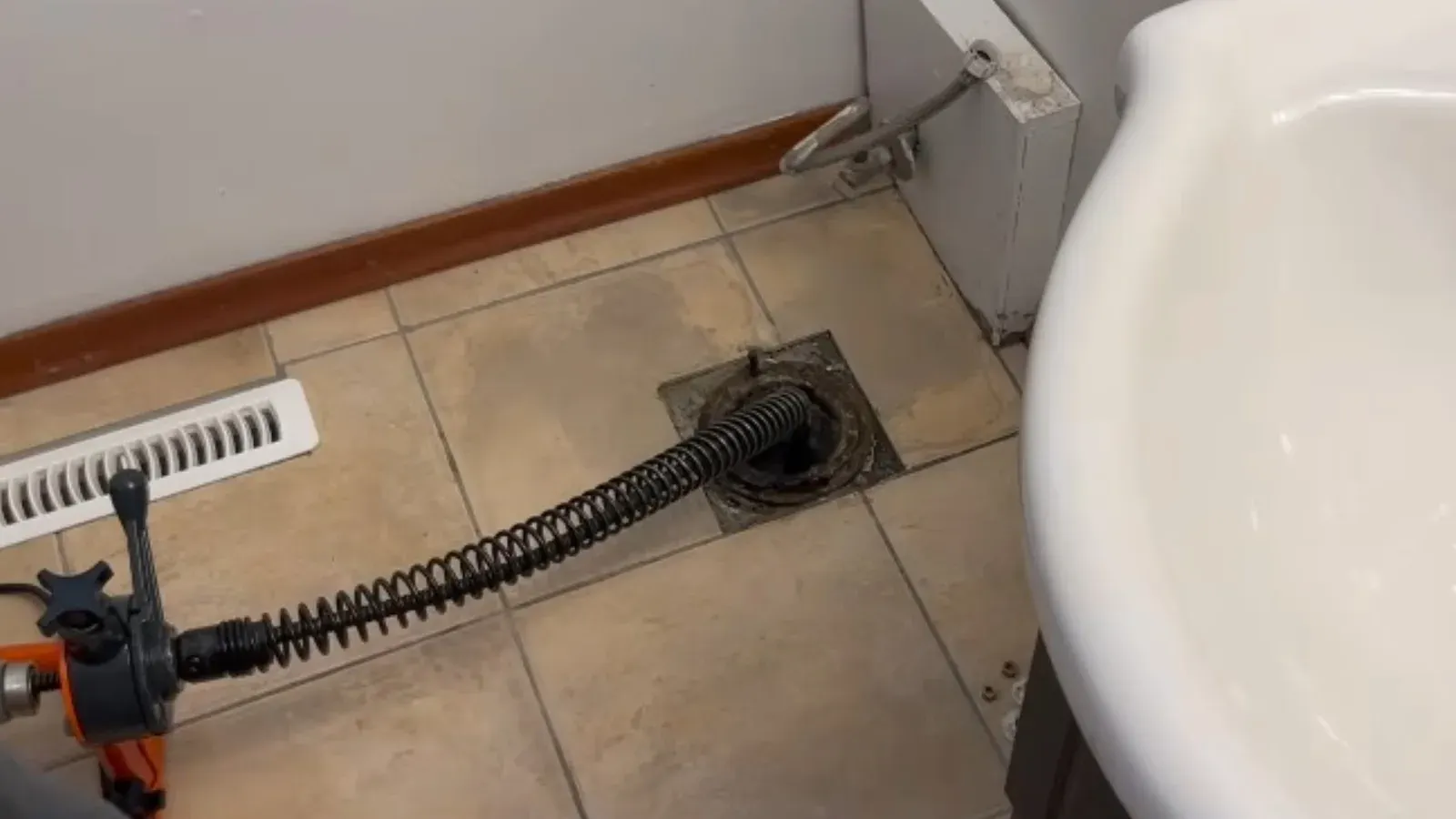
A toilet drains into a larger pipe, and that pipe can narrow with grease, paper or roots. Signs include gurgling from a shower or tub when the toilet flushes, water backing up into a low fixture or the smell of sewer gas. A cleaning with a cable or a hydro jet clears the line, and a camera shows the cause.
Our drain cleaning page explains cabling, and hydro jetting covers high-pressure cleaning for stubborn buildup. If a backup is already happening, stop using water and call the 24/7 line.
Low flow and older toilets
Toilets made to use less water per flush can clog more if they are poorly matched to the drain or have buildup in the rim. If yours is one of them, try a smaller amount of paper per flush and keep the bowl clean. A plumber can tell you whether the fixture or the drain is the weak point.
A toilet that rocks on the floor can also leak at the base and flush poorly. Check that it sits firmly, and look at the wax ring if you see water near the base.
When to stop and call
If water rises toward the rim and does not drop, stop flushing. Close the supply valve behind the toilet to keep the tank from refilling. Plunging a full bowl over and over only pushes more water around.
Call a plumber if the toilet clogs again within days of clearing, if several fixtures act up together or if you smell sewage. Those are signs the problem is deeper than one bowl. The visit usually includes a look at the line so the cause is found, not guessed.
Habits that prevent clogs
Small habits cut down on repeat clogs.
Flush only paper and waste
Everything else goes in the trash.
Use paper in moderation
Heavy loads can clog an older toilet.
Keep a plunger handy
A flanged plunger belongs in every bathroom.
Fix a slow flush early
A toilet that struggles now will clog later.
Keep grease out of drains
Grease hardens in the line and catches paper.
We serve Wake Forest and Rolesville through our Rolesville page, and the full area is on the service area page.
Questions about toilet clogs in Wake Forest
Who is responsible for the sewer line behind my toilet in Wake Forest?
Raleigh Water's guidance says the homeowner owns the service line from the house to the city main. If several drains are slow, ask a plumber to check the line from the cleanout.
Are flushable wipes safe for my pipes?
Raleigh Water's sewer FAQ lists wipes among items not to flush. They do not break down like toilet paper and are a common cause of clogs.