
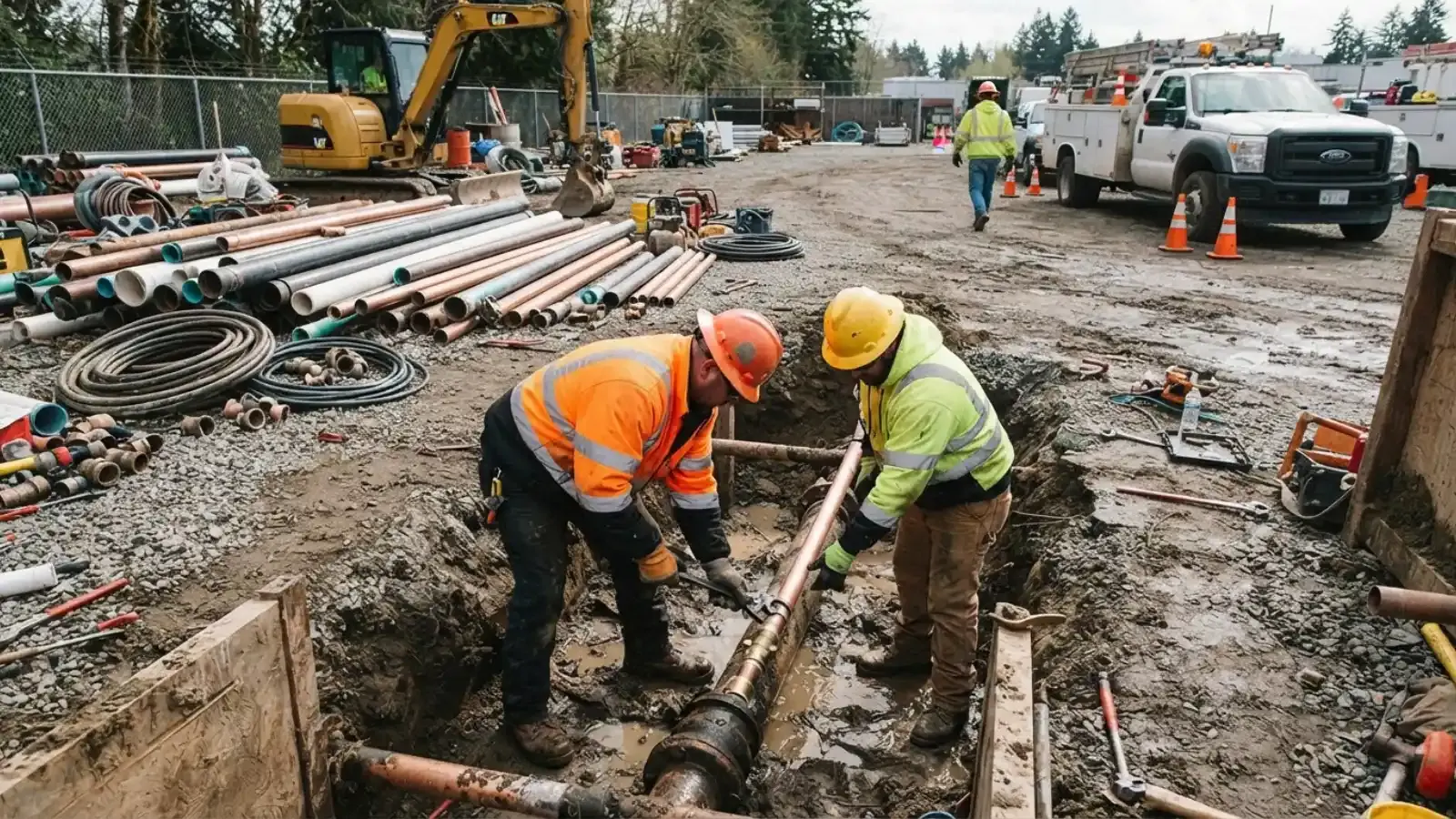
Raleigh Water is working on a project to replace aging water pipes inside the Town of Wake Forest. For homeowners, the interesting question is what it means at the tap. Crews shutting off a main, flushing a line or restoring service can all change how water behaves inside a house for a day or two.
This post explains what the project page says, what homeowners commonly notice and how to protect fixtures and appliances.
What the project covers
Raleigh Water's project page for the Wake Forest Water Main Replacement and Repair covers 17 areas of the water distribution system within the Town of Wake Forest. It also lists improvements to a gravity sewer, stormwater and part of a roadway. Its budget is listed at $14.5 million.
The page says the project is partly within the Glen Royall Mill Village, the Downtown Wake Forest and the Wake Forest historic districts. It says the purpose is to replace aging materials to meet future capacity demand.
The schedule text on the page is not consistent from one section to another, so we do not repeat dates here. Check the project page directly, or call Raleigh Water at 919-996-3245, for the current schedule on your street.
What homeowners may notice during main work
| What you may notice | Why it can happen | What to do |
|---|---|---|
| Cloudy or discolored water | Flow changes can stir up sediment in pipes | Run a cold tap until it clears |
| Low pressure for a short time | A nearby main is shut off or being tested | Wait, then check again |
| Air in the lines, sputtering faucets | Air enters when a line is drained and refilled | Open taps briefly to let it out |
| Short notice shutoff | Crews isolate a section to connect new pipe | Keep a few gallons stored |
| Sediment in an aerator | Particles move through pipes after work | Unscrew and clean the aerator |
Water problems after main work? Call and book a plumber.
Call (919) 944-7281Wake Forest local note: a main that failed twice in two days
WRAL reported that on January 27, 2016, a 12-inch water main in the 700 block of Durham Road ruptured for the second time in two days. Crews from the City of Raleigh made the repair, Durham Road was narrowed to one lane, and neighbors on several nearby streets lost water service. Service was restored by 7:15 that morning.
That event shows how one main failure can reach many homes at once. It is also the kind of history that makes a replacement project worth following. Source type: WRAL news report and Raleigh Water project page.
Protecting your fixtures
After main work, sediment can clog small parts. Aerators on faucets, screens on washing machine hoses and the inlet screens on some fixtures catch particles. Clean them if flow drops. Run a cold tap for a few minutes before using hot water, so you do not draw sediment into the water heater.
If you see discoloration in the water heater's hot water after the cold has cleared, the tank may have picked up sediment. A flush, described on our water heater repair page, helps. A plumber can also check whether a pressure change did any harm.
What about pressure
A new main can change pressure at your house. Higher pressure can stress older fixtures and supply lines, and lower pressure can make showers weak. A gauge on a hose bib tells you the pressure in a minute. A plumber can read the result and tell you whether a regulator is needed.
When to call a plumber
Call if the water does not clear after a reasonable time, if pressure stays low, if you hear banging in the pipes or if a fixture begins to leak after the work. Those can point to a problem at your property rather than in the street. If a line on your side of the meter is the cause, it is a water service line matter, and a split pipe is a burst pipe repair call.
We serve Wake Forest and Rolesville through our Rolesville page, and the full area is on the service area page.
Keep a few gallons on hand
Short-notice shutoffs can happen when crews isolate a main. A few gallons of stored water, sealed and dated, cover drinking, brushing teeth and flushing a toilet for a short outage. It is a small step that saves a scramble.
Know where your own shutoff is, too. If water returns with a surge after a repair, closing the main valve briefly can protect the house while the lines settle.
Appliances worth a second look
Washing machines, dishwashers and ice makers have small inlet screens. After main work, check them for grit. If a machine fills slowly, a clogged screen is the likely cause and the fix is a quick cleaning.
Water heaters after a shutoff
A water heater can pull sediment after a main shutoff and restoration. If the hot water looks cloudy, or the tank rumbles, ask a plumber to check it. Sediment left in a tank shortens its life and lowers efficiency.
Tankless units have fine screens and heat exchangers that can catch particles. If flow from a tankless heater drops after main work, a service visit with a flush is a sensible step.
Old houses and old pipes
Historic districts have older houses, and older houses may have older supply lines inside the walls. A new main does not fix those. If you have repeated leaks, rusty water that returns or weak flow at several fixtures, the problem may be inside the house. Repiping is the lasting answer in that case.
Questions about the Wake Forest main project
Where can I find the schedule for the water main project?
Raleigh Water's project page covers 17 areas in Wake Forest. Because its schedule text is not consistent, call Raleigh Water at 919-996-3245 to confirm timing for your street.
Why is my water cloudy after main work?
Flow changes in a main can stir up sediment. Run a cold tap until the water clears, and clean the faucet aerators if flow drops.